
AI Is Driving the Next Phase of Data Centre Growth—and Making Thermal Management Mission Critical
Artificial Intelligence is transforming the global data centre market, with investment in digital infrastructure expected to exceed £756 billion ($1 trillion) by 2030. As AI workloads become more demanding, however, the conversation is expanding beyond computing power alone.
The next challenge is ensuring that increasingly dense, energy-intensive infrastructure can operate reliably, efficiently, and at scale. According to IoT Analytics' Data Center Equipment & Infrastructure Market Report 2025–2030, global spending on data centre equipment and infrastructure reached £219 billion ($290 billion) in 2024 and is projected to more than triple by the end of the decade, representing growth of more than 250%. That growth is being driven by continued investment in AI, cloud computing, and high-performance computing (HPC), all of which require significantly greater processing capacity than traditional enterprise workloads. As computational density rises, thermal management is becoming a critical part of modern infrastructure design. "The challenge is not only to increase computing capacity, but also to ensure the reliability of the entire technology ecosystem," said Nicola Salvaggio, Business Development Director of Thermal Management at Faster, an Italian engineering company with more than 70 years of experience in hydraulic connection systems.
Cooling Becomes Part of Infrastructure Strategy
The rapid growth of Generative AI and HPC is changing the engineering requirements inside modern data centres. Capital expenditure across the data centre sector remains heavily concentrated in IT infrastructure. Servers, networking, and storage account for more than 70% of total investment, while power and cooling systems represent around 12%. Yet as AI drives demand for increasingly powerful servers, the importance of supporting infrastructure is also rising. According to IoT Analytics, the global data centre server market alone is expected to grow from £154 billion ($204 billion) in 2024 to £746 billion ($987 billion) by 2030, placing greater emphasis on the systems that keep those assets operating reliably. This is driving wider adoption of liquid cooling technologies, particularly in environments where operational continuity, energy efficiency and equipment reliability are critical. While removing heat remains fundamental, cooling is now influencing how safely, efficiently and reliably higher-density AI environments can operate over the long term.
Italy Strengthens Its Position
These trends are also influencing where new infrastructure is being built. According to Mordor Intelligence, the Italian data centre market is expected to experience substantial growth, increasing from £5.6 billion ($7.5 billion) in 2025 to £6.4 billion ($8.5 billion) in 2026 and approaching £11.3 billion ($15 billion) by 2031, with a compound annual growth rate (CAGR) of 12.1% between 2026 and 2031. In terms of IT load capacity, the market is forecast to expand from 1.08 GW in 2025 to 4.09 GW by 2030, reflecting a CAGR of 30.5% over the same period and strengthening Italy’s position as one of the leading emerging data centre hubs in the Mediterranean region. This growth is being driven by the continued expansion of hyperscale cloud infrastructure, public-sector digitalisation initiatives, and increasing demand for AI-driven computing capacity. As new facilities come online, attention is shifting from simply increasing capacity towards ensuring that supporting infrastructure can meet the demands of increasingly powerful AI systems. “The data centre industry is experiencing unprecedented growth, fuelled by the ever-increasing demand for computing power. Projections pointing towards more than $1 trillion in spending demonstrate that this is not simply a matter of expanding existing capacity, but of delivering a genuine step change in infrastructure engineering,” commented Salvaggio.
Engineering for Higher-density AI
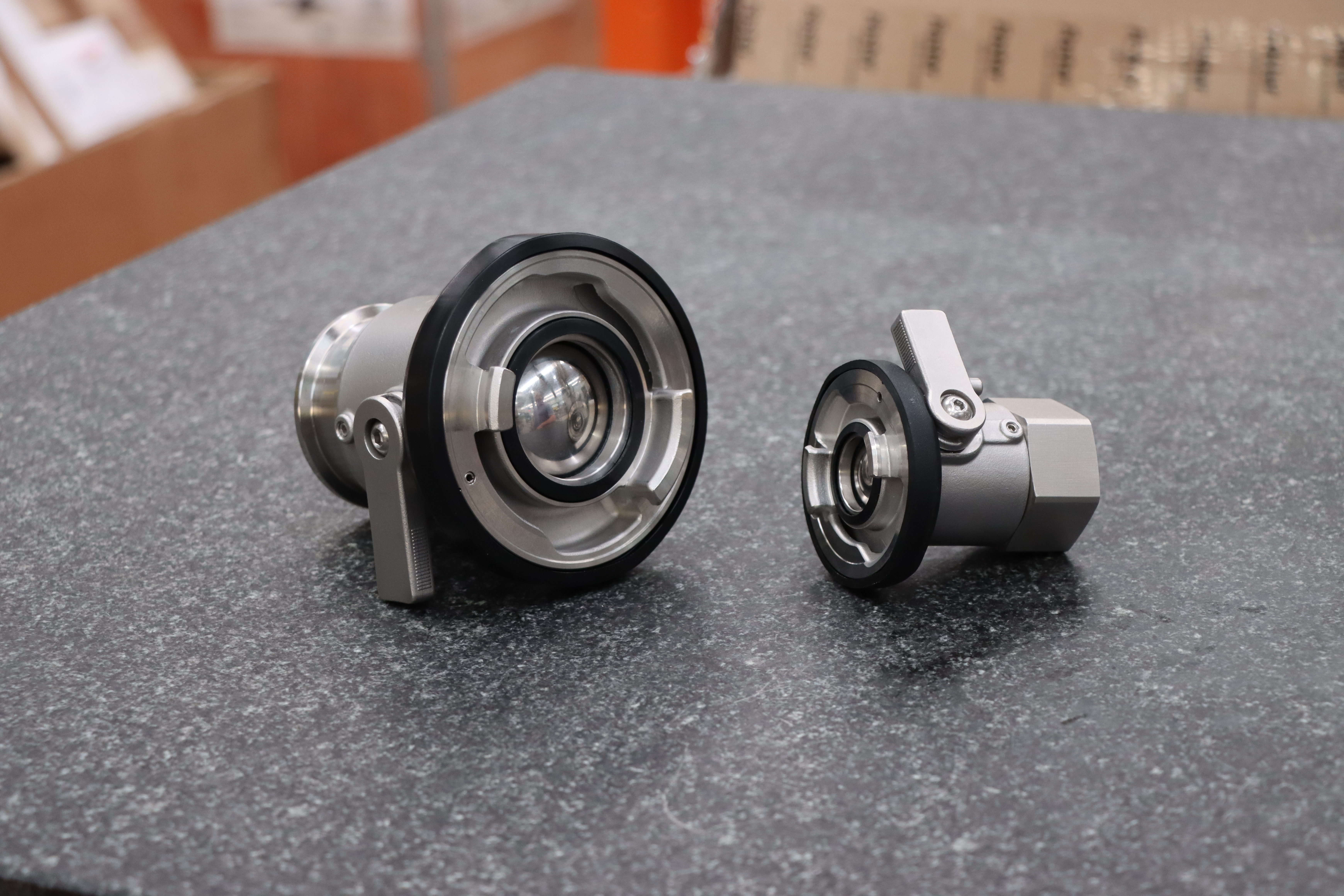
As AI rack densities continue to increase, cooling system manufacturers are redesigning products around higher flow rates, greater reliability, and the operational requirements of high-density AI infrastructure. Faster has expanded its Thermal Management portfolio with liquid cooling solutions for AI and HPC applications designed to meet Open Compute Project (OCP) specifications for data centre cooling. The company's solutions are designed for applications including direct-to-chip cooling and coolant distribution systems, where the safe movement of coolant plays an essential role in maintaining system reliability and protecting high-value computing equipment. The portfolio also includes the recently introduced SLM (Snap-Lock Modular) series, developed for high-flow liquid cooling architectures between Coolant Distribution Units (CDUs) and server racks. The design incorporates integrated coupling and valve technologies with a dual safety locking mechanism intended to improve operational safety and support high-density AI deployments. Rather than focusing solely on cooling performance, the engineering challenge centres on maintaining operational continuity in environments where even minor failures can have significant consequences.
Reliability Becomes the Differentiator
As AI infrastructure continues to scale, expectations around cooling systems are changing alongside it. "As servers become increasingly powerful, thermal management infrastructure must deliver uncompromising levels of reliability," added Salvaggio. "The growth of Artificial Intelligence is redefining data centre technology requirements and demanding components capable of ensuring consistent performance, safety and operational continuity throughout the entire cooling circuit." Faster's dedicated Thermal Management division reflects that wider focus on technologies developed for higher-density AI and HPC environments. The broader direction of the market is becoming equally clear. The next generation of AI infrastructure will require more than quicker processors and larger data centres. It will depend on the supporting systems that enable those facilities to operate reliably, efficiently and at scale. As investment continues to accelerate, thermal management is becoming less of a supporting technology and more of a strategic component of digital infrastructure itself.